Jewelry is often kept for years, passed down through generations, or worn only on special occasions. However, even high-quality jewelry can lose its appearance when it is stored incorrectly.
Scratches, tangles, tarnishing, and exposure to moisture are some of the most common problems that can occur when jewelry is simply placed in a drawer or left in an open space.
Knowing how to store jewelry safely without causing damage can help preserve its appearance and make your collection easier to organize.
Jewelry may look durable, but many pieces are vulnerable to scratches, moisture, chemicals, and friction.
When necklaces are stored together, for example, their chains can become tangled. Rings and bracelets can also scratch one another when they are placed in the same container without separation.
Some jewelry materials are particularly sensitive to environmental conditions. Silver can tarnish over time, while gemstones may become scratched when they come into contact with harder materials.
Proper storage therefore serves two purposes: protecting the jewelry and keeping it organized.
Before choosing a jewelry box, it helps to understand the habits that can cause unnecessary damage.
Putting rings, necklaces, bracelets, and earrings into one compartment may seem convenient, but it increases the risk of scratches and tangling.
Different types of jewelry should ideally have their own designated spaces.
Leaving jewelry on a table, bathroom counter, or open shelf exposes it to dust, humidity, and accidental contact.
Bathrooms can be particularly unsuitable because frequent changes in humidity may contribute to tarnishing and other material-related issues.
Moisture can be problematic for many types of jewelry, particularly pieces containing metals that are susceptible to tarnishing.
After wearing jewelry, make sure it is clean and dry before putting it away.
Necklaces and fine chains can easily become tangled when stored together.
Untangling them repeatedly can put unnecessary stress on delicate chains and clasps.
A jewelry container with hard or abrasive interior surfaces can potentially cause scratches over time.
Soft, jewelry-friendly compartments are a better choice for everyday storage.
The safest approach is to give each piece enough space while keeping the collection protected from unnecessary exposure.
Use individual compartments for rings, earrings, bracelets, and necklaces whenever possible.
This prevents pieces from rubbing against each other and makes it easier to find what you need.
Choose a dry storage location away from areas with frequent humidity.
It is also a good idea to remove jewelry before showering, swimming, or exercising whenever the specific piece is not designed for those conditions.
After wearing a piece, gently wipe away oils, sweat, or residue before returning it to storage.
However, cleaning methods should always be appropriate for the specific metal or gemstone. Some stones and finishes can be sensitive to certain cleaning products.
Fastening a necklace clasp before storage can help reduce the chance of chains becoming tangled with other pieces.
For delicate necklaces, individual compartments or dedicated necklace storage are even better.
A regular drawer may provide a convenient place to keep jewelry, but it does not necessarily provide the organization and protection that a dedicated jewelry box offers.
A well-designed jewelry box can provide:
More importantly, a jewelry box allows you to establish a consistent storage system instead of placing jewelry wherever there happens to be space.
Not every jewelry box is designed in the same way. When choosing one, consider the following factors.
The interior should be soft enough to minimize scratches and suitable for the types of jewelry you own.
Velvet, microfiber, and other soft materials are commonly used for jewelry storage because they provide a gentler surface than untreated hard materials.
Look for a jewelry box with different compartments for different types of pieces.
If you own many necklaces, for example, dedicated necklace storage can be more useful than having a large number of small compartments.
Consider your current collection as well as the jewelry you may acquire in the future.
A jewelry box that is too small can quickly become overcrowded, increasing the chance of pieces touching and tangling.
A sturdy exterior and well-organized interior can make a jewelry box more suitable for long-term use.
The goal is not simply to store jewelry but to create a dedicated environment where individual pieces can remain separated and protected.
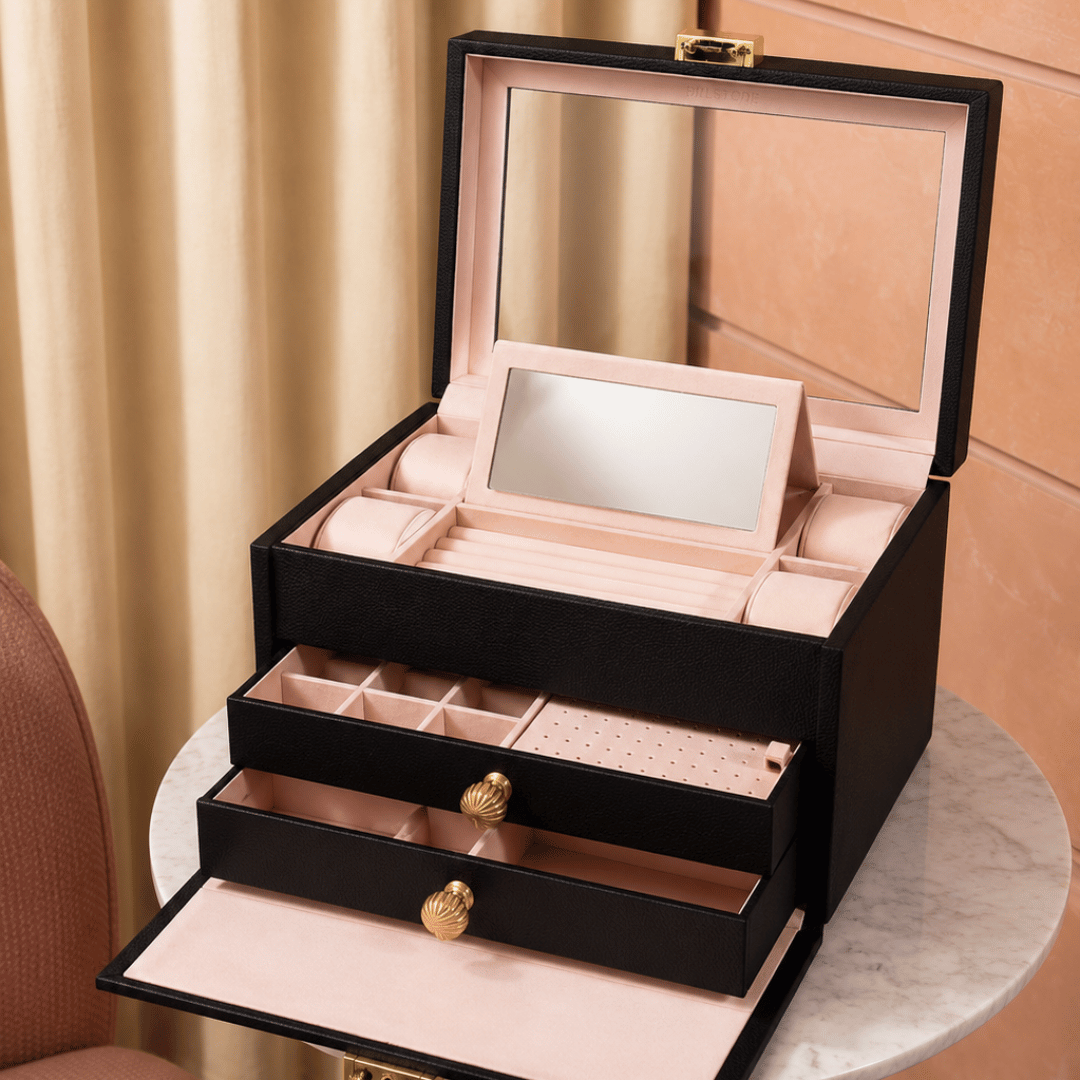
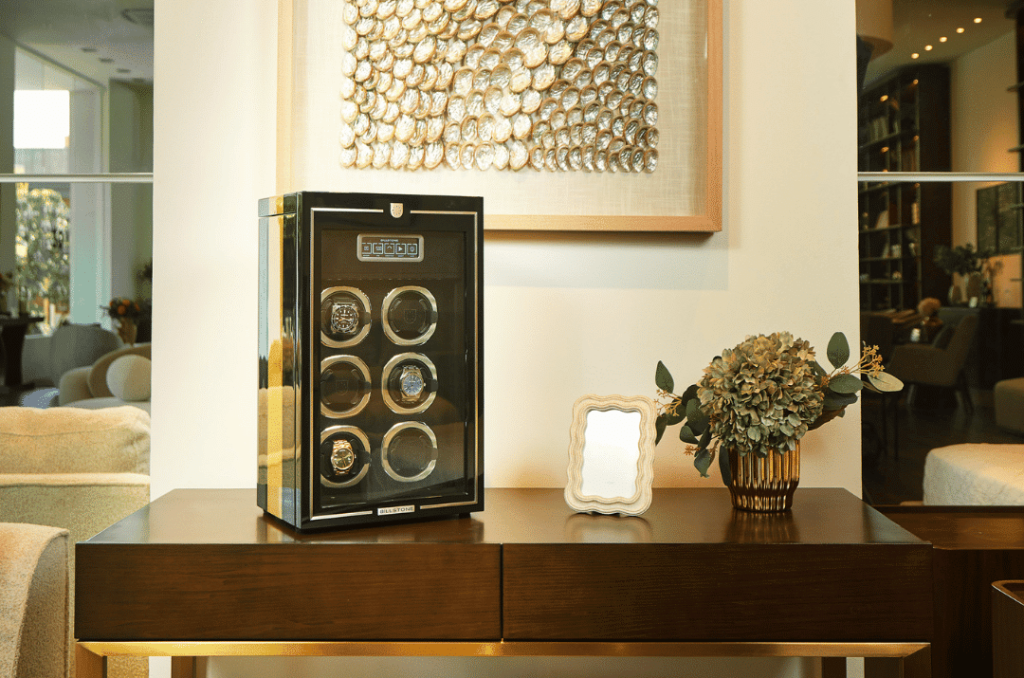
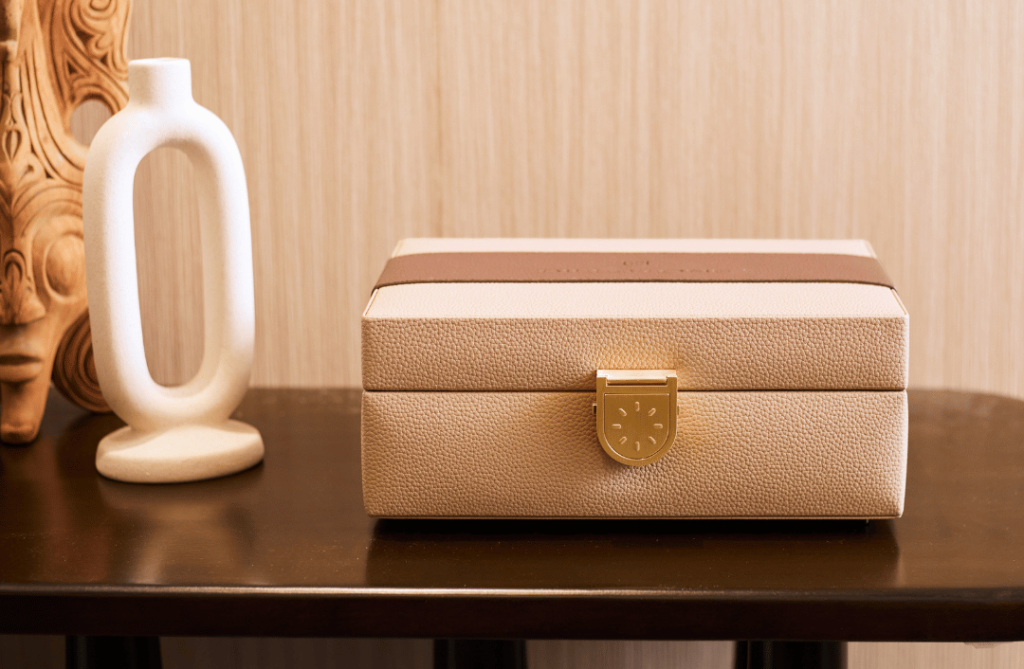
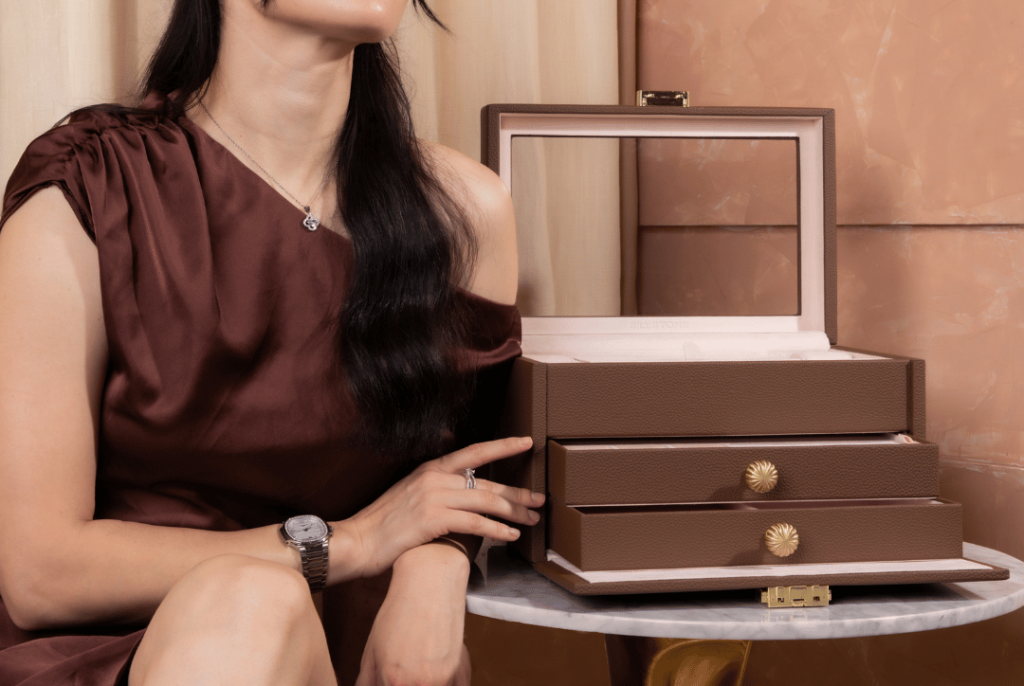
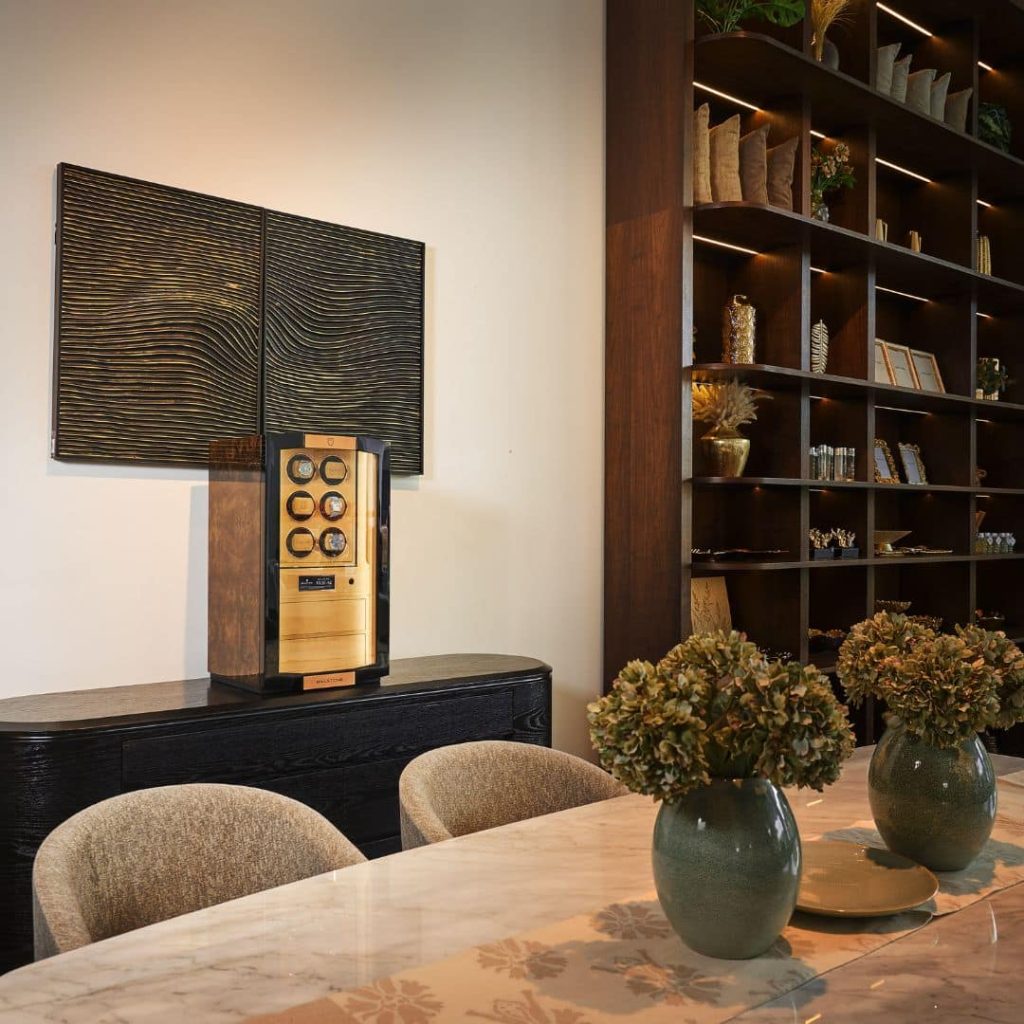
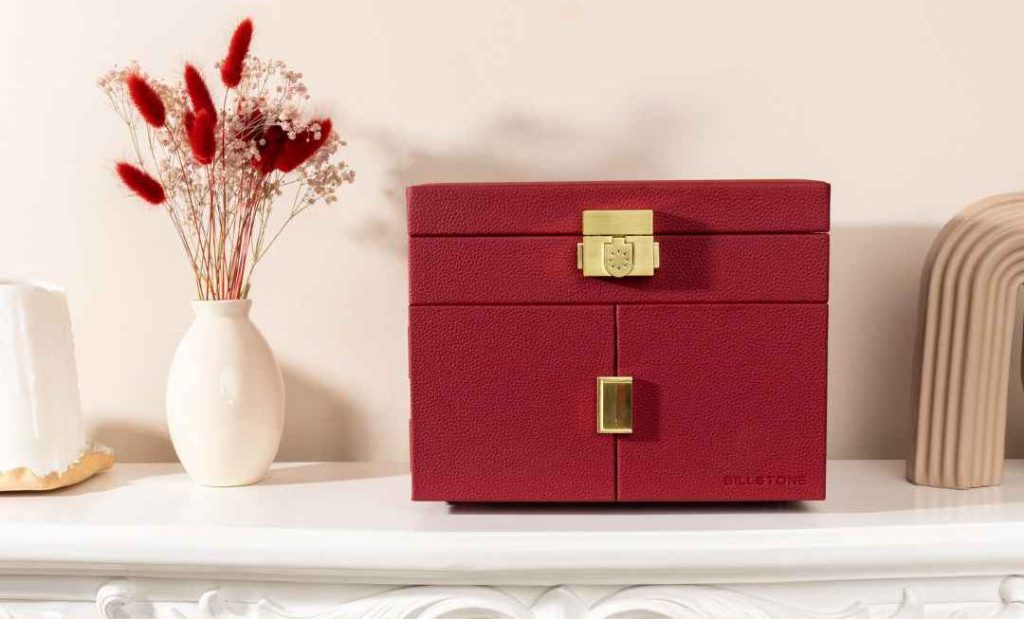
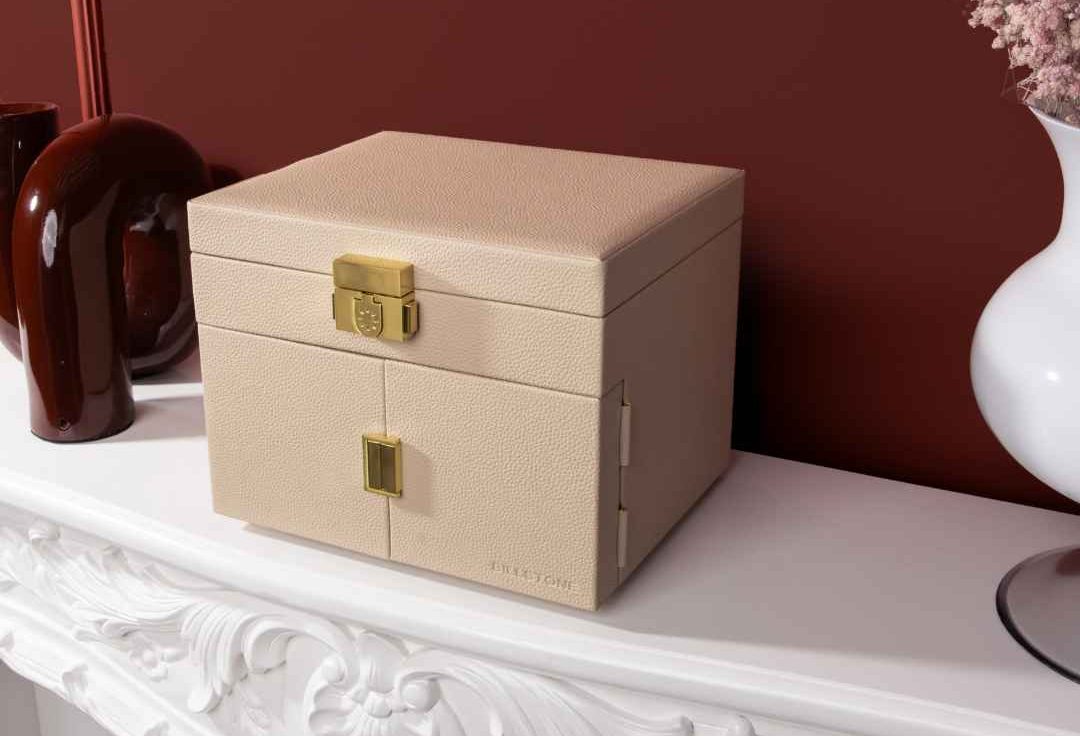
For collectors looking for a dedicated solution for organizing and protecting jewelry, the Billstone Aura Jewelry Box is a practical option.
Designed with jewelry organization in mind, the Aura Jewelry Box provides dedicated storage spaces that help keep different pieces separated instead of allowing them to accumulate together in a drawer.
Its refined design also allows it to function naturally within a dressing room, bedroom, or walk-in closet while keeping a jewelry collection organized and accessible.
The Aura is particularly suitable for people who own a variety of jewelry and want a more structured storage solution rather than relying on individual pouches or generic containers.
How to Organize Jewelry Inside a Jewelry Box
Once you have a dedicated jewelry box, the way you arrange the collection can make a significant difference.
Place necklaces in their designated compartments and avoid stacking several chains together.
If the box has individual necklace sections, use one section per necklace whenever possible.
Rings can be placed in dedicated ring slots to prevent them from rubbing against one another.
This is especially useful for pieces with gemstones or intricate surfaces.
If you have jewelry that you wear frequently, keep it in easily accessible sections.
More valuable or rarely worn pieces can be stored in less frequently accessed compartments to minimize unnecessary handling.
A jewelry box should not be packed beyond its intended capacity.
When compartments become overcrowded, jewelry can rub against other pieces and become more difficult to remove safely.
Individual pouches can be useful, especially for delicate pieces or jewelry that is not worn frequently.
However, using only pouches can make a larger collection difficult to organize. Necklaces may still become tangled, and small pieces can become difficult to locate.
A jewelry box with dedicated compartments provides a more systematic solution, while individual pouches can still be used inside the box when additional separation is needed.
The ideal location for jewelry storage is cool, dry, and away from direct sunlight and excessive humidity.
A bedroom, dressing area, or walk-in closet can be more suitable than a bathroom.
Avoid placing a jewelry box in areas where it is likely to encounter water, steam, or significant temperature and humidity fluctuations.
For especially valuable jewelry, consider additional security measures appropriate to the value of your collection.
Learning how to store jewelry safely without causing damage does not require a complicated routine.
The most important principles are simple: keep jewelry dry, separate individual pieces, avoid unnecessary friction, clean pieces appropriately before storage, and use a dedicated storage solution.
A quality jewelry box can make these habits much easier to maintain.
For those looking for a refined and organized storage solution, the Billstone Aura Jewelry Box offers a dedicated space for keeping a jewelry collection arranged and protected while complementing the interior of a bedroom or dressing area.
Proper storage is ultimately part of jewelry care. When each piece has its own place, your collection can remain organized, easier to access, and better protected for years to come.