
Now that Watches and Wonders Geneva 2026 has officially concluded, the industry has entered a more revealing phase reflection. This is where the difference becomes clear between watches that generated momentary excitement and those that continue to shape conversations long after the event ends.
Amid a landscape defined by technical innovation, experimental materials, and increasingly complex complications, one maison stood out by doing the opposite. Rather than competing for attention, Cartier leaned into restraint.
And in doing so, it may have made one of the most lasting impressions of the year.
An Anniversary That Feels Relevant, Not Nostalgic

At the core of Cartier’s 2026 presentation was the continued evolution of Cartier Privé, a platform long used to revisit and reinterpret the maison’s most distinctive designs. This year, however, the approach felt particularly refined.
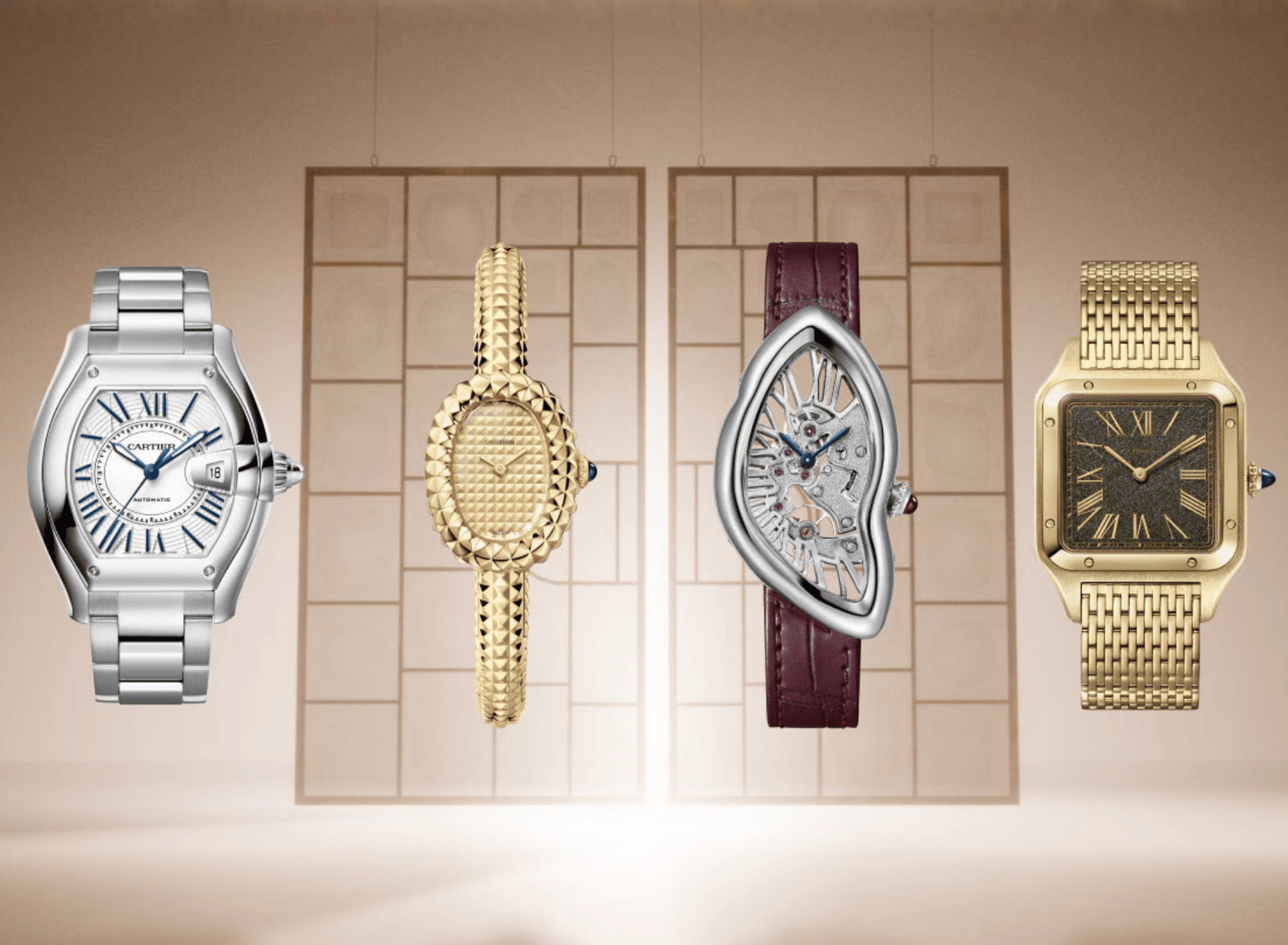
Rather than relying on pure reissues, Cartier focused on subtle reinterpretation preserving the essence of its historical designs while adjusting them for contemporary tastes. The result is a collection that feels connected to the past without being constrained by it.
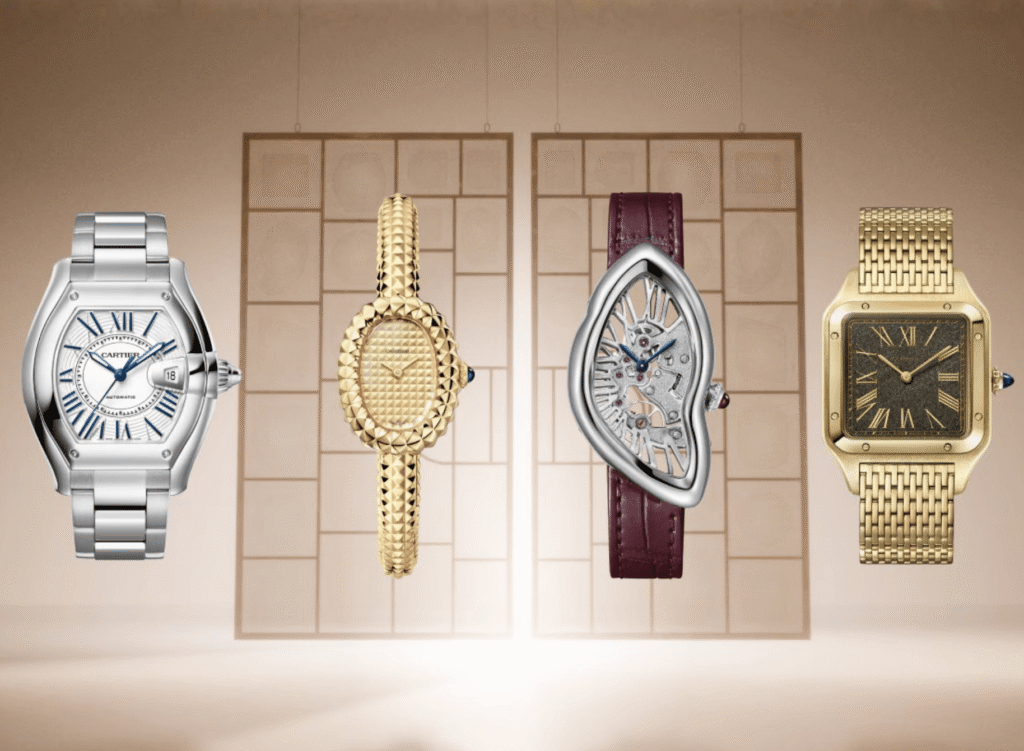
This philosophy extended to the renewed focus on icons such as the Cartier Santos one of the earliest modern wristwatch designs and the re-emergence of the more dynamic, automotive-inspired Cartier Roadster.
Crucially, these were not radical redesigns. Instead, Cartier refined proportions, sharpened details, and elevated execution. The changes are measured, but the impact is significant.
This is not nostalgia. It is repositioning.
Design Over Complexity And Why It Still Wins
Watches and Wonders 2026 saw no shortage of technical ambition. Across the fair, brands introduced increasingly sophisticated complications, new materials, and engineering feats designed to capture immediate attention.
Cartier chose a different path.
Rather than emphasizing what happens inside the watch, the maison focused on how the watch is experienced. Case proportions, dial clarity, and visual identity took precedence over mechanical spectacle.
This approach underscores a fundamental truth: the emotional connection between a watch and its wearer often begins with design.
Cartier’s watches are instantly recognizable not because of what they do, but because of how they look and feel. In a crowded market, that level of clarity is rare.
And perhaps more importantly, it endures beyond the initial wave of excitement.
The Return of Icon-Led Watchmaking

One of the defining themes of Watches and Wonders Geneva 2026 was the resurgence of icon-driven design. Many brands revisited historical models, seeking to capitalize on heritage and familiarity.
Yet not all approaches were equally effective.
Cartier demonstrated a particularly strong understanding of how to handle legacy. Through the balance of exclusivity in Privé and broader appeal in models like Santos and Roadster, the maison showed that icons do not need to be reinvented to remain relevant.
They need to be understood.
By preserving core design elements while refining execution, Cartier ensures continuity without stagnation. The watches feel authentic not forced.
In an industry often driven by novelty, this restraint stands out.
A More Subtle Kind of Innovation
At first glance, Cartier’s 2026 releases may appear less innovative than those of brands pushing the boundaries of mechanics or materials. However, this perception overlooks a different, more nuanced form of innovation.
Cartier innovates through perspective.
Rather than redefining how watches function, the maison reconsiders how they are perceived. It prioritizes emotional resonance over technical complexity, creating objects that feel personal rather than purely mechanical.
This approach aligns with a broader shift among collectors, many of whom are increasingly drawn to watches that offer character, identity, and storytelling.
In this context, Cartier’s strategy feels not only intentional but forward-thinking.
What Cartier Got Right in 2026
Looking back after the event, several factors explain why Cartier remains one of the most discussed brands:
It did not attempt to follow every trend.
It avoided overcomplicating its narrative.
And most importantly, it remained consistent with its identity.
These decisions resulted in a collection that feels composed rather than performative.
While other releases may have generated louder initial reactions, Cartier’s watches continue to resonate. They invite repeated consideration rather than fleeting admiration.
A Different Measure of Success
Success at Watches and Wonders is often measured by immediate visibility—the volume of coverage, the intensity of social media engagement, the size of the initial reaction.
But these metrics are inherently temporary.
Once the booths are dismantled and the headlines shift, a more meaningful question emerges:
Which watches are still being discussed?
In 2026, Cartier is firmly among them.
Not because it delivered the most extreme innovations, but because it offered something more enduring clarity of design, strength of identity, and a sense of continuity.
Closing Thought
Cartier did not aim to dominate the spotlight at Watches and Wonders this year. Instead, it focused on something far more difficult to achieve: lasting relevance. In an industry defined by constant change, the ability to remain both consistent and contemporary is a rare advantage. Cartier demonstrated that true innovation does not always require complexity sometimes, it requires precision in restraint. And long after the noise of 2026 fades, that restraint may prove to be the most impactful statement of all.