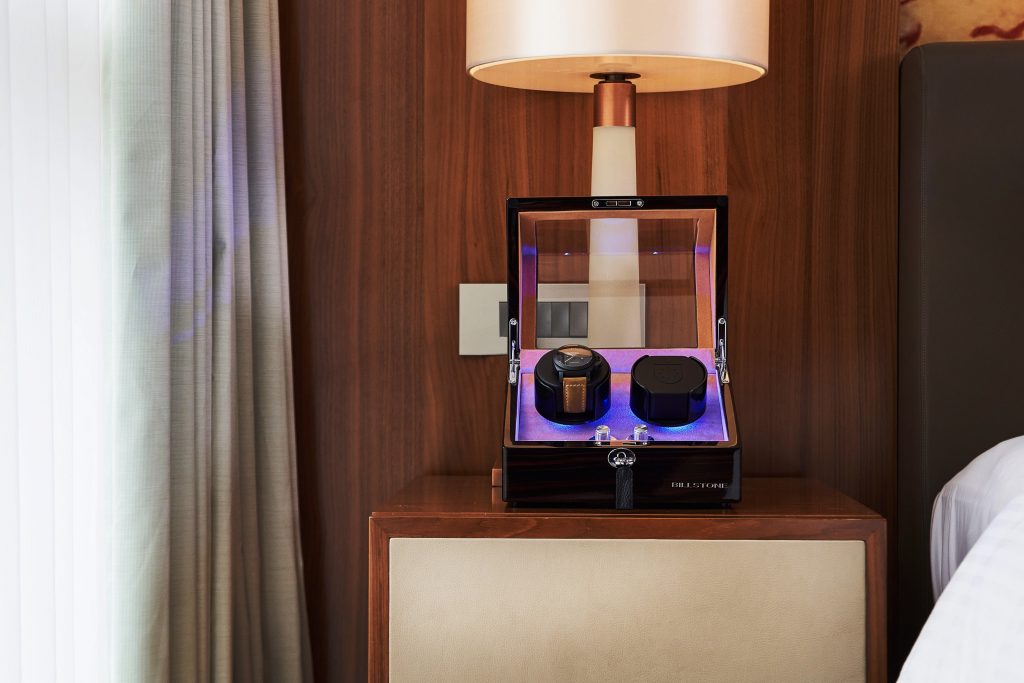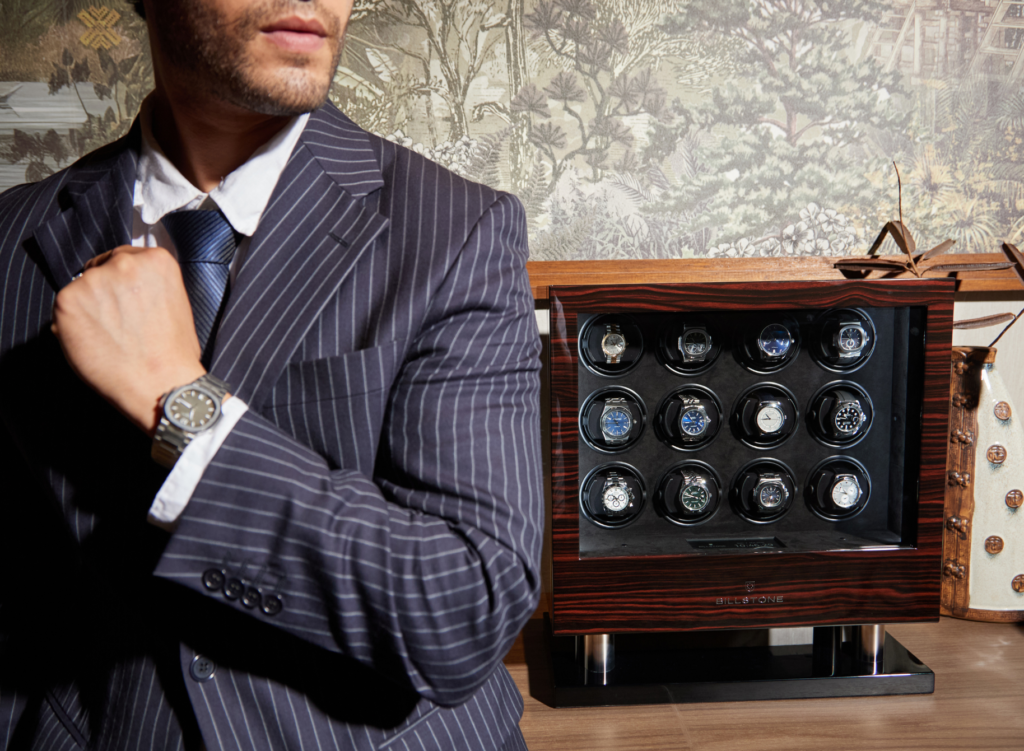


When your luxury watch collection is starting to expand considerably, perhaps it’s time to consider a watch winder. You might have seen a watch being displayed while rotating inside a box, and wondered what it does, or if you need one to accompany your timepiece collections? To answer your question, here’s everything you need to know about watch winders.
What is a watch winder?
A tool that works by simulating the natural movements of your arm, a watch winder will keep your watches perfectly wound when not worn. Watch winders can be set up according to the specificities needed by different watches, thus eliminating the fuss of needing to wind it every time you want to wear a certain watch.
Do you really need a watch winder?
As mentioned earlier about watch winders, a watch winder eliminates the fuss of having to wind a watch every day. This can be an immense help for those whose watch collection ranges from dress, diver, or even a mix of modern and vintage watches. A watch winder offers an extra hand in winding the watch in whichever direction the watch needs, to fulfill the needed Turns Per Day to keep the watch wound around the clock.
How does a watch winder work?
Although they might look mechanical and intimidating, watch winders are designed for ease of use. After all, its sole purpose is to take off your load in having to wind watches each time you need to wear it. Simply, a watch winder works by rotating in a circle – mimicking the natural movement of the arm, as if the watch is actually being worn. Most winders will rotate for several minutes, then pausing before continuing to rotate again. This day-long process is what results in a perfectly wound watch, ready to go at a moment’s notice.
What do I need to look about watch winders?
As easy as it is to reduce a watch winder to a device that rotates your watch for you, you really need to understand the different features of your watches and winders to get the maximum benefits. One of the key features to look further into is the Turns Per Day (TPD) and rotation direction (clockwise/ counterclockwise/ both) and match it with your watches, as well as whether the winder offers full customization to tailor the experience to your needs. If you’d like to take the security of your collections into account, you can also find winders that are equipped with keylock, passcodes, or even fingerprint locks.