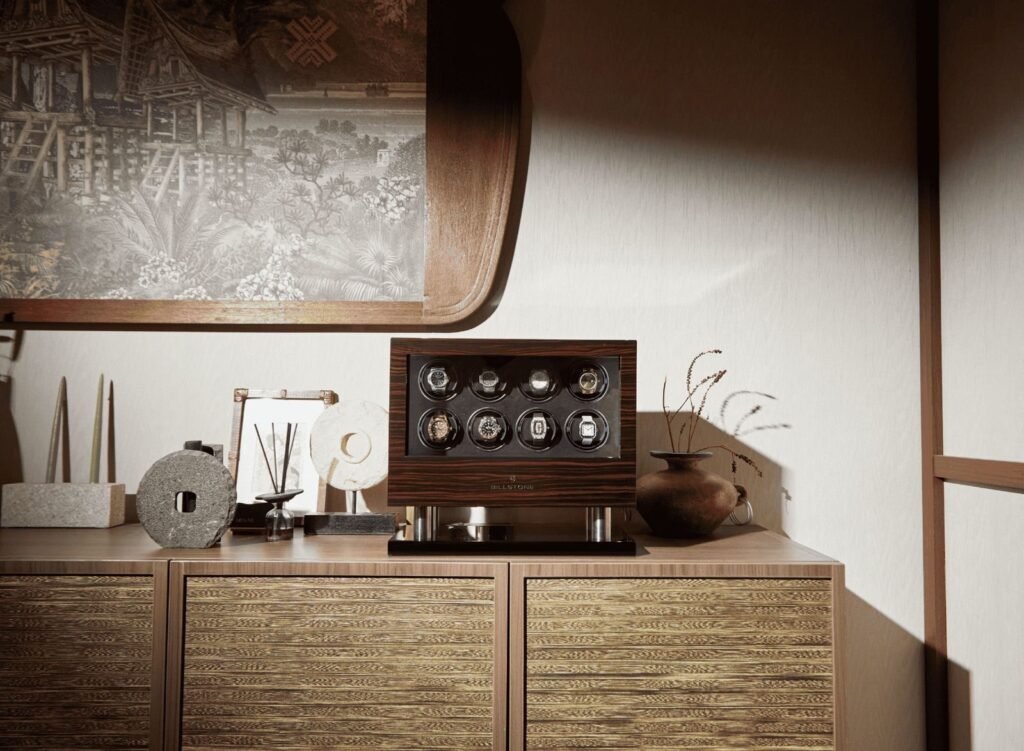


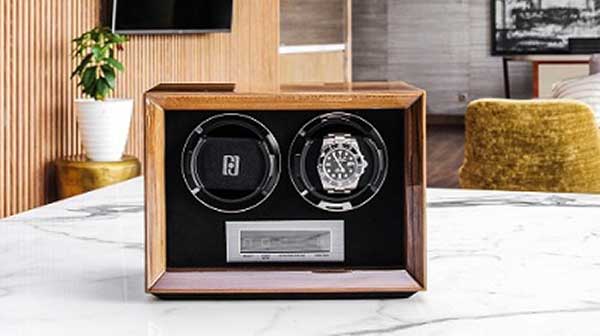
Perhaps you’ve seen before a display of high-end watches stored in beautiful and sophisticated cases. But there’s a catch: those watches are not idling in its box. Instead, they are rotating continuously. If you’re a fan of Marvel movies, there’s a chance you’ve seen a set of winders steal a scene from the Dr. Strange movie, when he reached out to pick a watch from one of his luxury watch collections. So it looks cool, but how does such a fancy tool like a watch winder work, really?
A watch winder serves to keep your automatic watches powered when they not on your wrist for a long period of time. They often come in the appearance of being very high-tech and sophisticated. By principle, a watch winder works by mimicking the motion of a wearer’s wrist to fulfill the goal of keeping the watch wound even when the owner is not wearing it. A watch winder works inconspicuously, often unnoticed, since it works without creating sounds. You can simply leave your watch in the case, and let the watch winder work by itself.
The mechanism of how a watch winder works is simple: the watch winder works by slowly rotating your timepiece that is placed on a pad inside a case or a box, eliminating the possibility of damages to the watch from being idle after a long time of not being worn. A watch winder is an ideal tool to have for those whose watch collections are extensive. In its operations, the watch winder works by fulfilling a certain amount of Rotations Per Day, or Turns Per Day (TPD), required by your timepiece. Some watch winders allow personalization in ensuring that the minimum TPD are met. Furthermore, the watch winder works by allowing multiple rotation directions, allowing for different types of watches to be wound as needed, and a watch winder also works by not working: allowing a resting period in between winding cycles. Additionally, to make sure that your watch winder works without interruption, you must ensure a reliable power source that can keep the watch winder working without pausing.
Whether you need a watch winder for your collection is entirely up to you: but it is always good to keep these handy tools in mind especially when your collection is large and still growing. Now that you know the basics of how a watch winder works, you can make a better decision once you decide to invest in a watch winder of your own.